Wednesday, August 6, 2025

4 august 2025

Some warning weather and with it an offshore wind to keep the marine layer marine.  Seeing was good for the 6-inch so that's what I used.  The sky was still hazy, so fainter stars were more difficult to see.  Only had an hour and a half out, but it felt nice to be back in the habit.  I have already observed almost all the CDSA list in the summer sky, so I switched to the Burnham list for many of the observations. 

BU 56 AB: 152; 250x: Excellent close pair, 1 Dm, just split with seeing.  2% PRO, 101 AU WS, 1.1+1.3 Msol, it is possibly binary and needs an orbit tried.
20h 05m 07.26s -04° 18' 29.3" P.A. 189.00 sep 1.3 mag 8.01,9.10 Sp F5 dist. 77.46 pc (252.67 l.y.)

BU 60 AB: 152; 175x: Bright white A and very faint close B. 60% PRO, 712 AU WS, 4.2+2.0 Msol, but 0.01 PMV.  It might be binary, and orbit can be tried.
20h 27m 19.20s -18° 12' 42.1" P.A. 148.00 sep 3.5 mag 5.13,8.53 Sp B8II-III dist. 167.22 pc (545.47 l.y.)

BU 62 AB: 152; 250x: Very finely split faint stars, near equal.  -18% PRO, 607 AU WS, 2.8+2.3 Msol, it is not likely binary.
20h 28m 00.64s +30° 08' 02.6" P.A. 133.00 sep 1.2 mag 8.70,9.79 Sp A0

BU 67 AB: 152; 250x: Overlapping disks, large Dm.  -8% PRO, 181 AU WS, 2.2+1.1 Msol, low 0.06 PMV, it is not likely binary.
20h 50m 36.05s +30° 54' 45.7" P.A. 311.00 sep 1.5 mag 6.85,9.87 Sp A8III dist. 120.05 pc (391.6 l.y.)

BU 68 AB: 152; 175x: Faint, unequal stars, closely split.  -10% PRO, 352 AU WS, 0.09 PMV, it is not likely binary.
20h 59m 28.27s +50° 12' 41.0" P.A. 149.00 sep 2.0 mag 9.20,9.68 Sp A5 dist. 184.16 pc (600.73 l.y.)

BU 154 AB: 152; 175x: Split with low power, better view higher, unequal, fairly close split.  60% PRO, 527 AU WS, 1.7+1.4 Msol, and RVD 1.0 < EV 3.2, 0.09 PMV.  It is likely binary (as opposed to StelleDoppie) and needs an orbit.
20h 52m 49.68s -16° 09' 54.5" P.A. 61.00 sep 3.0 mag 8.97,9.97 Sp G2V dist. 247.52 pc (807.41 l.y.)

BU  249 AB: 152; 250x: With seeing and high power only, white stars, large delta, very fine split.  No Gaia parallax data for companion.  Given how close it is, an orbit should be tried.
19h 38m 21.68s +00° 20' 43.6" P.A. 106.00 sep 0.8 mag 7.40,9.41 Sp A7IV dist. 106.16 pc (346.29 l.y.)

BU  423 AB: 152; 250x: Very faint, near equal, hazy view, with seeing.  93% PRO, 363 AU WS, 2.2+2.5 Msol, 0.05 PMV, it is possibly binary and needs an orbit.
19h 27m 51.67s -29° 29' 55.3" P.A. 127.00 sep 1.2 mag 8.58,8.89 Sp G0 dist. 251.26 pc (819.61 l.y.)

BU 425 AB: 152; 175x: Very fine split, near equal.  -20% PRO, it is not likely binary.
19h 57m 32.28s +20° 17' 40.1" P.A. 240.00 sep 1.4 mag 9.17,9.24 Sp B9 dist. 540.54 pc (1763.24 l.y.)

BU 442 AB: 152; 125x: Rich field in finder and main scope, arc of three stars.  42% PRO, 8,641 AU WS, 4.7+3.4 Msol, there is some chance it is binary, can orbit can be tried.
20h 16m 29.84s +37° 38' 35.4" P.A. 103.00 sep 18.3 mag 9.72,8.04 Sp B0III

BU 1475 AB: 152; 125x: Light orange A and well split B, 2 Dm.  66% PRO, 6,920 AU WS, 5.2+3.1 Msol, but RVD 2.6 > EV 1.5, it is not binary
19h 57m 53.70s -09° 03' 30.3" P.A. 113.00 sep 10.4 mag 7.77,9.47 Sp K2 dist. 247.52 pc (807.41 l.y.)

BU 1478 AB: 152; 125x: Wide B with averted vision only, compared to bright white A.   -70% PRO, it is not binary.
20h 03m 49.62s +14° 58' 58.8" P.A. 170.00 sep 28.6 mag 7.00,11.43 Sp G0Ia dist. 2380.95 pc (7766.66 l.y.)

H N 119 AB: 152; 125x: Bright yellow A and well split, faint 2 Dm light orange B.  64% PRO, 641 AU WS, 2.7+1.1 Msol, but RVD 3.9 > EV 3.3, and there is a low PMV 0.01, it is not likely binary.
19h 29m 52.18s -26° 59' 08.2" P.A. 144.00 sep 7.5 mag 5.61,8.82 Sp K2III dist. 71.74 pc (234.02 l.y.)

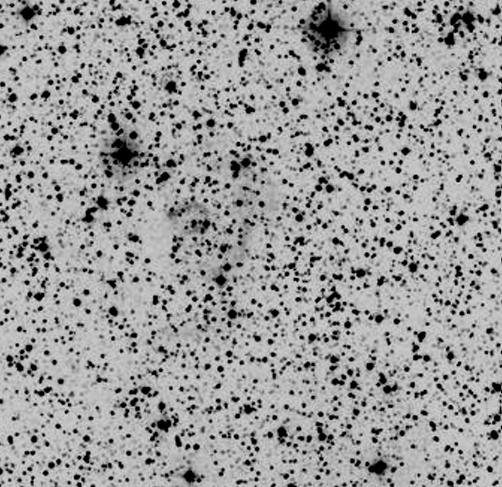
S 715 AB: 152; 125x: Wide 1 Dm white stars, seems to lie on the edge of a star field or open cluster.  55% PRO, 1165 AU WS, 2.3+1.9 Msol, but a slightly negative -0.08 PMV, it is possibly binary and needs an orbit.
19h 17m 39.96s -15° 58' 01.7" P.A. 17.00 sep 8.4 mag 7.07,7.90 Sp A3V dist. 132.8 pc (433.19 l.y.)

SCJ 22 AB: 152; 250x: Split with 125x, better seen with 175x & 250x.  Light yellow near equal close split.  -46% PRO, it should not be binary, but it is only 34 AU WS, 0.9+0.9, and a SOC grade 2 orbit.  Parallax may be error prone at near distances?  167-year period.
19h 28m 12.26s -12° 08' 40.7" P.A. 296.00 sep 1.2 mag 8.12,8.69 Sp G8V dist. 36.62 pc (119.45 l.y.)

STF2504 AB: 152; 125x: Lovely well split pair, 2 Dm, white A and light-yellow B.  13% PRO, 542 AU WS, 1.6+1.0, RVD 1.8 < EV 2.9, and 0.06 PMV, it is possibly binary and needs an orbit.
19h 20m 59.85s +19° 08' 43.4" P.A. 282.00 sep 8.7 mag 7.00,9.03 Sp F5V dist. 62.7 pc (204.53 l.y.)

STFB 10 A: 152; 125x:  Altair.  Very wide, need to pan scope.  No Gaia parallax data, anyone's guess.
19h 50m 46.99s +08° 52' 05.9" P.A. 286.00 sep 195.8 mag 0.95,9.82 Sp A7V dist. 5.13 pc (16.73 l.y.) 

Sunday, August 3, 2025

28 july 2025

July has been a very poor observing month.  The whole summer has been unusually cool, with the marine layer blowing in each evening.  Good for comfort, bad for backyard astronomy.  This night was clear, but with poor transparency and average seeing.  Nonetheless there were two observations I needed to make, in response to posts I had seen on CN.

HU 575 AB: 508, 564x: A short period pair I've been following in my movement pair list.  This night it was suspected double at lower power but easily split with higher powers.  Unequal light orange stars.  When I compare this sketch to one made in May 2020, I notice considerable change in the PA, and that I needed far less magnification to split it (0.336" PA 71.4 in 2020, and 0.482" 25.4 in 2025).  


Next was the Cygnus Egg, RAFGL 2688, which someone raved how night vision had transformed the view.  Using my 20-inch, I observed it visually and with NV.  

Visually, the nebula appears like two small, faint elongated elliptical galaxies end to end with a small gap between, with the points nearest each other a little brighter.  The "wings" were narrow lines and faded at the opposing ends.  I needed 282x to darken the background sky for the "best view."  Adding a single polarizer, and spinning the eyepiece, helped marginally to bring out more glow.

Using the PVS-14 afocally with the 67mm Plossl+ (38x) and a 685 longpass filter did have a dramatic effect.  It was now a high surface brightness object and appeared like two comets with fan-shaped tails facing each other.  The brighter one appeared slightly larger and seemed to have a star at its inside tip; the other was fainter, with a shorter tail, its inside tip was brighter.  I did not notice any detail; the image scale was small.  I had a similar view unfiltered, but the background sky was brighter, and I preferred the filtered view.

I then used the PVS-14 in prime focus mode -- having removed the 1x objective and using threaded adapters to a 2-inch nosepiece and adding a 2x barlow to reach focus (195x).  Still with the 685 longpass, I had a similar view as afocal but at much larger image scale.  This time, I could see subtle, turbulent dark mottling inside both "wings," but I did not see it as a distinct "X" shape or as concentric rippling (as in the Hubble photos).  I did, however, have the sense of a extremely faint roundish, puffy cloud of nebula, some 3x the diameter of the wings and surrounding them -- but this could have just been background nebulous atmosphere.  Maybe this would show better at a dark site.


Saturday, June 28, 2025

27 june 2025, movement pairs

Seeing was not exceptional, but it was good enough to open the 20-inch and go after some movement pairs -- after what seems like a long while.  Got started at 10:00pm and finished at 12:30am.  Seeing did improve through the night, and it felt great to be out observing these pairs no one else tries to see.

HU  481 AB" 508; 847x: Exceptionally fine pair, 2 Dm, PA to the southwest.  SOC grade 3 orbit, 119.5-year period, it will widen slightly in the next 20 years but remain in the southwest.    
16h 21m 14.74s +22° 59' 18.8" P.A. 237.00 sep 0.5 mag 8.21,10.04 Sp F8 dist. 66.18 pc (215.88 l.y.)

KUI  66 AB: 508; 508x: 15 Boo.  Using an apodising mask and viewing through the peephole in my eyepiece cap, with seeing only, I see very small, faint point of light inside the first diffraction ring, ESE PA, closely separated. Interesting the B star has a 10th magnitude companion!  which I did not see, of course.
14h 14m 50.85s +10° 06' 02.2" P.A. 111.00 sep 0.8 mag 5.44,8.43 Sp K1III dist. 81.23 pc (264.97 l.y.)


KUI  79 AB: 508; 508x: Excellent, nicely split, faint, light red-orange stars, near equal, SSW PA.  Split with 282x but better seen 508x.  SOC grade 1 orbit, 12.955-year period (!), it will hang at this separation for a couple more years before diving to periastron, becoming detectible again after 2030.
17h 12m 07.78s +45° 39' 57.6" P.A. 289.00 sep 0.7 mag 10.02,10.25 Sp M3V dist. 5.98 pc (19.51 l.y.)

STF1865 AB: 508; 1693x: With apodising mask and peephole, all powers, elongated N-S.  SOC grade 2 orbit, 125.24-year period, it is coming off periastron now and will be resolvable in a couple years.  Struve was lucky to discover it at apastron. 
14h 41m 08.92s +13° 43' 42.0" P.A. 265.00 sep 0.1 mag 4.46,4.55 Sp A0V+A0V dist. 53.88 pc (175.76 l.y.)


STF1998 AB 508; 282x: Xi Sco.  Nice pair, equal white stars closely split, PA NE.  SOC grade 1 orbit, 45.9-year period, it will close and be due east by 2040.
16h 04m 22.13s -11° 22' 23.2" P.A. 12.00 sep 1.2 mag 4.84,4.86 Sp F5IV+F5IV


STT 341 AB: 508; 635x: Lovely light orange stars, 1Dm, nice separation, PA ESE.  SOC grade 2 orbit, it will head further SE until 2033 when it begins a rapid dive toward periastron, not resolvable again until the 2040s.
18h 05m 49.72s +21° 26' 45.6" P.A. 89.00 sep 0.452 mag 7.39,8.82 Sp G0V+G5V dist. 39.45 pc (128.69 l.y.)

Thursday, June 19, 2025

17 june 2025

Hopefully our luck is changing weather-wise, as there have been several nights of at least clear skies.  Opened up the 20-inch in case seeing would cooperate, but it was poor at full aperture, so I masked down to 7-inches for the session.  I've run out of targets in the 13-15h range on the CDSA list, except for the closest splits which would require better seeing.  I'll spend some time learning how to use my Questar and trying to use the NV device on my 20-inch (more in-focus needed, so might need to rebuild the focuser board).

BU 1443 AB: 178; 140x: 3 Dm, very wide.  20% PRO, but a very wide 11,730 AU WS, 3.9+1.2 Msol, and RVD 5.6 > EV, it is not binary.
14h 30m 45.39s +04° 46' 20.2" P.A. 195.00 sep 55.7 mag 6.17,10.62 Sp gK4 dist. 212.77 pc (694.06 l.y.)

HLD  18 AB: 178; 280x: 3 Dm, difficult, can just detect B with direct vision, close to A, need magnification to separate. 16% PRO, 570 AU WS, 2.2+1.1 Msol, it is possibly binary and needs an orbit.
14h 19m 25.83s -18° 31' 25.0" P.A. 355.00 sep 3.6 mag 7.35,10.68 Sp A3m+A8/F2 dist. 127.06 pc (414.47 l.y.)

STF1523 AB: 178; 200x: Alula Australis. Light yellow unequal stars, well split.  No Gaia parallax data.  SOC grade 1 orbit, 59.89-year period, currently apastron to the south east, it will be due east in 2045.
11h 18m 10.90s +31° 31' 45.0" P.A. 152.00 sep 2.3 mag 4.33,4.80 Sp F9V+G9V dist. 10.42 pc (33.99 l.y.)
STF1852 AB: 178; 140x: 3Dm, very wide. 48% PRO, 1,567 AU WS, 1.5+0.6 Msol, but RVD 3.2 > EV 1.6, it is not binary.
14h 30m 00.14s -04° 14' 49.9" P.A. 267.00 sep 24.9 mag 7.09,10.60 Sp F2V dist. 56.92 pc (185.67 l.y.)

STF1870 AB: 178; 140x: White, 2 Dm, well split. -5% PRO, it is not likely binary.
14h 42m 55.10s +08° 04' 34.3" P.A. 229.00 sep 4.8 mag 7.46,9.98 Sp F2 dist. 198.02 pc (645.94 l.y.)

STT 209 AB: 178; 140x: 3 Dm, well split.  64% PRO, 1,012 AU WS, 2.8+1.2 Msol, but RVD 3.7 > EV 2.6, it is not binary.
09h 53m 17.23s +50° 37' 16.3" P.A. 309.00 sep 4.9 mag 7.41,10.31 Sp G8IV dist. 196.85 pc (642.12 l.y.)

STT 258 AB: 178; 140x: Wide 3 Dm.  1% PRO with 0.8% error, 1,899 AU WS, 2.7+1.1 Msol, but RVD 4.2 > EV 1.9, it is not binary.
12h 54m 13.34s +82° 31' 03.8" P.A. 71.00 sep 10.5 mag 7.25,10.59 Sp K0 dist. 166.94 pc (544.56 l.y.)

STT 281 AB: 178; 280x: Very fine light orange stars, very closely split, 2 Dm, B is a fine point of light.  No Gaia parallax data for B, but an orbit should be tried.
14h 20m 20.85s +08° 34' 56.3" P.A. 166.00 sep 1.5 mag 7.71,9.69 Sp G5

STT 305 AB: 178; 140x: Bright pair, 2 Dm, well split, yellow-white stars.  90% PRO, 1,123 AU WS, 3.5+1.2 Msol, but RVD 4.6 > EV 2.7, it is not binary.
16h 11m 39.60s +33° 20' 33.8" P.A. 263.00 sep 5.7 mag 6.44,10.17 Sp K2III dist. 154.56 pc (504.17 l.y.)

STT 522 AB: 178; 140x: Faint and wide B with averted vision only.  40% PRO, 3,604 AU WS, 3.0+0.9 Msol, with a strong PMV, it is likely binary and needs an orbit
09h 53m 54.04s +64° 47' 20.2" P.A. 124.00 sep 14.5 mag 7.50,12.10 Sp K0 dist. 219.78 pc (716.92 l.y.)

Tuesday, June 17, 2025

Titan shadow transit of Saturn

It's been a frustrating observing season, with hazy skies, poor seeing, and marine layers rolling in every night.  The night of 6/15-16 was to feature a rare shadow transit of Titan across Saturn.  This happens every 18 years or so, and there will be several more transits in the coming months, but since we're heading into fire season, I wanted to be sure to see this one.  For this transit the shadow would move close to the middle of Saturn, while the others would be more toward the polar region and be somewhat more difficult to see.

I drove up to Henry Coe in the late evening, intending to get above the Bay's marine haze and to have a good view to the east.  I emailed the rangers a couple days in advance, but the gate was locked when I arrived, and there weren't any rangers at the visitor's center.  I parked outside the gate and carried all my gear to the other end of the lot, with a view of the eastern horizon.

I used my C8 on the G11 mount.  The mount is overkill but was actually a good decision since it remained windy all night.  Transparency was on the poor side and seeing was atrocious.  I had some pointing problems with the mount (I'm not used to it yet), so I didn't bother with any purposeful observing.  I brought my night vision device and am very pleased I can reach focus with it in prime configuration in the C8, achieving a nicely illuminated image at a "normal" image scale of around a half degree.  I made a round of various Messier & NGC globular clusters in Sagittarius -- all of which I've seen before, so I didn't take notes.  All the globular were resolved to their cores, bright, and the star fields were very rich.  The views are at least as good as my 20-inch would be visually in a dark site.  I'm very happy to have the versatility of using the device for more than just large nebula.

But I did view some large nebula all the same.  I scanned around using Ha and the 3x objective looking many things I've seen before.  The sky was washed out and the nebula were not as bright or detailed as they would be from a darker site.  All the same, I noticed to the far southern horizon Gum 53, below Sivan 8.  It was very large, fairly bright (even considering it was in Gilroy's light dome), and dual fan shaped -- two wings with a dark V-shape in between.  Astro photos show many dark nebula trunks coursing through it, but I didn't see such detail since I was using low magnification, but I did see very faint streams of nebula running between it up to Sivan 8. 


Around midnight I tried to sleep in my car, intending to wake up at 3:00am when Saturn should be well risen and the shadow transit should be approaching its midpoint.  But I didn't sleep very well and got up at 2:30am.  I looked at the 3rd quarter moon for a while.  Seeing was still soft, transparency a little worse, and it was still gusting.  Saturn looked very poor when I first slewed to it, I could barely make out any bands and only saw a small formless dark smudge where the shadow should be.  I touched-up my collimation and continued to observe.  After 20 minutes or so, at 3:30am, the seeing settled down enough to give me a fine view of the small dark dot of shadow, just below the very thin rings (which appeared as a dark slash through the planet -- viewed nearly edge on they weren't reflecting so much light back).  In moments of best seeing, I could see the very small, tiny points of Dione & Tethys, and even Enceladus which was a brightening on the outer edge of the rings.  Rhea was easy and bright further west from the system.


Mission accomplished, I started packing at 4:00am and drove home.  There are more events in the weeks to come and hopefully I can see them (maybe even from home).

Thursday, May 22, 2025

surprises at TB

Tuesday presented good enough conditions to justify a trip down to "Tranquility Base" on the central coast.  The coming weekend is out due to the holiday, and the weather next week is uncertain.  I had a gap in my work schedule and could afford the time to go down.

I left the Bay Area at 2:00pm to try and beat traffic and was mostly successful.  Since darkness is not until after 8:30pm, I had a long lingering restaurant dinner (instead of my usual picnic with supermarket food) and drove into the site.  The roads have been patched since my last visit, and while still a relatively rough ride, a lot better than before.

There was no one in the area, not even at the nearby campground.  I saw only one car departing and that was all.  Going out during the week, and well before a busy weekend, was a good choice.  I set up and waited for night, watching the bats darting around as darkness fell.  As the song says, "I saw the constellations / Reveal themselves one star at a time."

I brought my 10-inch and intended to continue Vogel's Large Planetary list and to try for flat galaxies with NV at prime focus.  The planetaries went well enough, but when I configured the device for prime for the flat galaxies, it needed much more in-focus than I had set-up for.  I may need to replace the focuser and try it again.  It's strange: on the Newtonians the prime configuration needs more in-focus, while refractors seem to need out-focus.  

Abell 21: 07:29.0 +13°15' v.10.2 744"x509" Viewed while not fully dark.  Faint, raggedly round with one brighter side making it a C-shape, and a fission of faint nebula from the opposite side.  Ha.

Abell 24: 07 51 38 +03 00 27, 6'. Hazy edge, round, with two bright lobes facing each other inside the glow.  Near two bright stars, easy to find. Ha.

TK 1 = Ton 320: 08 27 05.53 +31 30 08, 30' diameter, PN G191.4+33.0: Small at low magnification, very vague diffuse cloud in a faint group of stars.  Noticed only by changing filters, as there is very little contrast with the background sky.  It could be mistaken for galactic nebula, do not see rounding in it.  There is a very faint extension of nebula to the west into a group of 3 stars.  Very difficult, Ha & Ha+OIII dual band.

Abell 28: 08 41 35 +58 14 03, 5' diameter.  Seen Ha+OIII dual band only, very tenuously seen with flashes of averted vision, round, uneven surface brightness, hazy edges.

Abell 31: 08:54.2 +08 54, v12.0, 970"x930": Fairly bright, oval shaped, very mottled, bright patch to southwest, on one corner of a box asterism of stars.  Ha.  (Two hawks screaming at each other from a tree at the edge of the meadow during this observation).

Abell 35: 12:53.7 -22 52, v13.3, 938"x636": Pretty large, moderately bright and diffuse, centered on a bright star, mostly round, two brighter streaks through the southern half.  Ha.

Abell 36: 13:40.7 -19 53, v11.8, 478"x281".  Bright, fairly large, best with Ha+OIII dual band.  The bright asymmetric central shell has a bright uneven rim and has a sharp cut off along the northern edge, which is nearly flat.  A very faint, two-armed lobe emerges farther north and is about the same size as the central shell. There is a very weak, smaller shell to the southeast of the central shell, and looks like a dethatched comma.

Next, I did some browsing with my NV device at 1x and 3x, observing the Milky Way now that it was well up.  I re-observed the Spica Nebula, a very large roughly triangular shaped lightening of the sky background around and below Spica.  I think I'm still the only person to observe this through any kind of eyepiece.  I looked at Sivan 8, one of my favorites.

Around 11:30pm I took a break from NV and used my visual eyepieces.  Stars were much tighter, the sky background darker, but of course everything was fainter.  I did a small tour of some Messier objects: M4, M68, M83, and so on.  Omega Centauri was too low, but I had a nice view of the bright, disturbed galaxy NGC 5128.  

Out of the corner of my eye I noticed a bright orange light rising from the hills.  I thought maybe it was a plane, but it accelerated and curved toward the west.  I realized it was a rocket launch from Vandeberg, though the color and the size of the plume was smaller than other rocket launches I've seen (I found out the next day it was a Minuteman III, of course smaller than the other rockets).  It was fortunate I was set-up for visual and quickly pointed my scope at it and started tracking.  There was a spray of debris (a dozen?) which was quickly following the rocket -- I wonder if it was an anti-missile defense mechanism? or just a stage separation?  As the rocket was headed due west (it was headed for the Marshall Islands), and I didn't need to slew the scope as much to keep up with it.  There was a bright flash and then a burst of vapor, so I assume that was a stage separation (it likely was, probably second stage ignition).  It seemed I was looking directly behind the rocket, since the vapor came out as a burst around the rocket, which stayed in the center.  After a few seconds there was a burst of a thick blue ring, like a smoke ring, which spread out from the rocket.  Third stage?  A few seconds later, there were pulses of vapor, forming concentric circles which spread out.  Then the vapor swirled -- like the rocket was spinning as the vapor came from it.  Eventually there was no more vapor, but I could still see the brighter rocket (maybe just it's glowing cone) swiftly followed by a fainter point -- likely a stage skirt or a stage itself.  Until I lost the view.  When I looked up from the eyepiece at the sky, there was a large, moustache-shaped, long vapor trail with a bright knot in the lower end which hung above Corvus.  In the west there was a large, thick-walled oval formed by the vapor I had seen, it was nearly as large as Leo.  As I watched it slowly grew in size: incredible to see it first as a complete oval, then as an arch intersected by the nearby hills.  My quick field sketch tries to show it in relation to Leo:


Now that I know it was a Minuteman, I can only imagine the scene when dozens of them are launched at the same time -- a terrifying spectacle.  

After trying and failing to use prime focus in this set-up, I went back to afocal NV observing.  I reobserved Sivan 8, at the base of Scorpio's tail, with the 10-inch.  I was careful to reobserve the large cone-shaped nebula along the north inner rim of the nebula -- a larger, more challenging Cone Nebula.  It was clearly there, along with several other crenelations along the rest of the rim.  This is such a dramatic nebula, amazing to behold.

Outers 4: 21h 11 48 +59 59 12 69'x20': This is a very strange bipolar nebula in the center of Sh2-129.  I observed it first a couple years ago with my NP101.  Now with the 10-inch, it was a little more obvious, meaning I could more quickly pick out the very subtle, thick-finger-shaped milky contrast change.  The southern portion is relatively brighter than the northern, of which I barely made out the section nearest the star.  With Ha, it was still very subtle and helped by knowing where to look.  It was even fainter than what's shown in the photo. 

IPHASX J205013.7 +465518: Near Deneb, this appeared best unfiltered and was a small, very faint, irregularly oval milky wash with a stronger western rim and mottling in the center.  Nicknamed the Ear Nebula, it is a relatively old and very faint planetary nebula that was discovered by the INT/WFC Photometric H-alpha Survey of the Northern Galactic Plane (IPHAS) in 2005. The black and white photo is a good representation of what I saw (though at larger scale).  The color photo was taken by the Mosaic camera on the Mayall 4-meter telescope at Kitt Peak National Observatory. 


I woke at 6am, getting only 3 hours of sleep -- though it was that solid, blackout kind of sleep of the very tired.  It was still cool, and the sun had not yet overcome the eastern hills.  When I come out to this site, I always regret not spending more time here to go hiking or to explore the interesting rock formations -- I hesitate to leave expensive telescope equipment unattended in a car.  This time, since I knew no one was in the campground, and it was still very early for people to come in, I decided to drive down the road a little to explore an interesting rock outcrop.  I scrambled up the rocks, which formed different levels one could climb, and noted various caves, boulders, and interesting plants -- including a succulent called "live forever" which clung to the lip of a cave.  I felt free, exhilarated, since this was not part of my plan.  As Simic said, not even my fate knew where I was.  I very much needed a break from all my various pressures and obligations.


Upon arriving home and taking a shower, I found a black tick on my shin.  I quickly picked it off and checked the rest of my body, and washed all my clothes and camping gear etc.  So, this wasn't all a fun outing!

Sunday, May 11, 2025

5 may 2025

A nice night out with the 6-inch, in spite of thin wispy clouds and average seeing.  I had a limited number of doubles to observe on the CDSA list, so I switched to my "Green Star" list and to a list of red stars -- many of which might have spectra on the red-end, but which appeared mostly off-white, with a couple of exceptions.  Now that we're moving toward summer, there should be many more nights of fine viewing ahead.

IQ UMa = 83 UMa: 152; 125x: Light orange, bright.  Wikipedia: "The visible component is an evolved red giant with a stellar classification of M2 III. It is a marginal barium star, showing an enhanced abundance of s-process elements in its outer atmosphere. This material may have been acquired during a previous mass transfer from a now white dwarf companion, or self-enriched by a dredge-up during the asymptotic giant branch process."

BGH  50 AB: 152; 125x: Superwide, 2 Dm.  2% PRO, 4,276 AU WS, 1.3+0.9 Msol, but RVD 1.6 > EV 1.0, it is not binary. 
14h 04m 45.95s +25° 49' 03.9" P.A. 32.00 sep 97.0 mag 7.00,8.90 Sp F5+K0 dist. 44.01 pc (143.56 l.y.)

BU  115 AB: 152; 180x: Very closely split, very much fainter B.  -55% PRO, it is not binary (in spite of SOC grade 5 orbit)>
13h 45m 20.87s +09° 03' 28.6" P.A. 259.00 sep 1.6 mag 7.53,10.40 Sp G5 dist. 54.67 pc (178.33 l.y.)

BU  341 AB: 152; 380x: Notched elongation with one weak end, unequal.  No Gaia parallax data.  SOC grade 3 orbit, 59-year period, it is at apastron now, and should close rapidly in the next few years.
13h 03m 46.09s -20° 35' 00.3" P.A. 130.00 sep 0.2 mag 6.25,6.51 Sp F8V dist. 28.21 pc (92.02 l.y.)
BU  413 = W Hya AB: 152; 125x: Noticeably red, also seen with 60mm finder.  M8e (red).  No Gaia data, but a previously recorded linear solution.
13h 49m 02.00s -28° 22' 03.5" P.A. 106.00 sep 66.8 mag 7.79,9.59 Sp M8e dist. 104.28 pc (340.16 l.y.)

This with the 20-inch 5/8:
BU  802 AB: 508; 200x: White A and much fainter B, well separated but looks like an artist's depiction of a planet.  15% PRO, 383 AU WS, 1.7+0.8 Msol, and RVD 2.9 < EV 3.4, it is possibly binary an needs an orbit.
13h 48m 36.15s +48° 21' 23.6" P.A. 227.00 sep 3.2 mag 7.56,11.78 Sp A8IV dist. 117.23 pc (382.4 l.y.)

BU  921 A-BC: 152; 125x: Nothing remarkable, white A and wide faint B.  BC is 11th mag 0.2 and likely why it was pulled up as binary.  No gaia data for B. 
12h 17m 55.52s -24° 00' 48.2" P.A. 221.00 sep 3.4 mag 7.01,10.67 Sp A0V dist. 141.04 pc (460.07 l.y.)

BU  935 AB: 152; 250x:  Component of STF 1780.  AB is a difficult 3 Dm 1" separated pair, no Gaia data.
13h 45m 56.33s -12° 25' 35.6" P.A. 304.00 sep 1.0 mag 5.66,8.47 Sp G8III dist. 124.69 pc (406.74 l.y.)

CY CVn: 152; 125x: Subtle orange tinge, not strong. Spectral M8 D ~.

ER Vir: 152; 125x: Very subtle off-white to pink tinge. Spectral M4III C

EV Vir: 152; 125x: Very light yellow. M4-M4.5II-III B

HD 119173: 152; 125x: Faint, very subtle red.  G0V C

HD 120248: 152; 125x: White. G3V C

HD 124292: 152; 125x: Off-white G8/K0V D

HD 126328: 152; 125x: Off-white K2 E

HR 5334: 152; 125x: Very light yellow M2III D

HU  740 AB: 152; 125x: Wide B very faint, seen with foveal coaxing only.  25% PRO, 754 AU WS, 2.5+1.0 Msol, it is possibly binary and needs an orbit.
13h 19m 44.11s -11° 40' 22.7" P.A. 273.00 sep 4.1 mag 7.31,11.35 Sp A2 dist. 245.1 pc (799.52 l.y.)

STF1724 AB: 152; 125x: Bright white yellow A, much fainter well split B.  MCA Aa-Ab is the prize, 0.4", need to reobserve.  AB -50% PRO, it is not binary.
13h 09m 57.01s -05° 32' 20.1" P.A. 342.00 sep 7.0 mag 4.40,9.39 Sp A0IV dist. 96.81 pc (315.79 l.y.)

STF1752 AB: 152; 250x: B with seeing, very much fainter on inside edge of white A's diffraction ring.  No gaia data for A
13h 28m 49.82s +59° 55' 41.7" P.A. 107.00 sep 1.0 mag 8.19,9.90 Sp F8 dist. 73.42 pc (239.5 l.y.)

STF1788 AB: 152; 125x: Well separated, unequal.  63% PRO, 126 AU WS, 1.1+1.3 Msol, RVD 0.6 < EV 5.7, it is likely binary and needs an orbit.
13h 54m 58.20s -08° 03' 31.9" P.A. 100.00 sep 3.7 mag 6.68,7.26 Sp F8V+G0 dist. 33.08 pc (107.91 l.y.)

STF1802 AB: 152; 200x: 1 Dm, well split. -93% PRO, it is not binary.
14h 08m 04.10s -12° 55' 42.1" P.A. 276.00 sep 6.0 mag 8.05,9.02 Sp G8/K0V: dist. 62.89 pc (205.15 l.y.)

STF1821 AB: 152; 125x: Bright A has a very light green tinge, wide 2 Dm B.  No parallax data for B.  SOC grade 5 orbit, >10,000-year period
14h 13m 29.00s +51° 47' 23.8" P.A. 236.00 sep 13.8 mag 4.53,6.62 Sp A7V+F1V dist. 50.1 pc (163.43 l.y.)
STF1846 AB: 152; 180x: Very bright orange A with much fainter, fairly close split B. -42% PRO, it is not binary.
14h 28m 12.22s -02° 13' 40.6" P.A. 111.00 sep 5.2 mag 4.92,10.02 Sp G2III dist. 36.26 pc (118.28 l.y.)

STF1965 AB: 152; 125x: A is pale white with a very subtle green tinge, wide 1 Dm B.  81% PRO, 987 AU WS, 3.8+3.0, it is possibly binary and needs an orbit.
15h 39m 22.68s +36° 38' 09.0" P.A. 306.00 sep 6.4 mag 4.96,5.91 Sp B7V+B9V dist. 145.14 pc (473.45 l.y.)

STT 279 AB: 152; 250x: Split with low power but better seen higher powers, very light orange stars, 4 Dm, close split.  -58% PRO, it is not binary.
14h 13m 49.46s +11° 59' 51.9" P.A. 257.00 sep 2.2 mag 6.84,9.13 Sp K2III dist. 170.94 pc (557.61 l.y.)

STT 299 AB: 152; 250x: Don't see green color, 1 Dm faint pair, fairly closely split.  23% PRO, 547 AU WS, 2.3+1.3 Msol, it might be binary and needs an orbit.
15h 33m 51.06s +63° 54' 25.7" P.A. 24.00 sep 3.3 mag 7.50,9.89 Sp A6V+KIII dist. 138.7 pc (452.44 l.y.)